Mini Greenhouse – How to Extend the Gardening Season by 3 Months?
Growing plants in a mini greenhouse allows you to extend the growing season by several or even more than ten weeks. The structure can be effectively used on a balcony, terrace, or in the garden despite limited space. Find out what to grow and when to maximize the use of your mini greenhouse.
Why Does Growing in a Mini Greenhouse Extend the Gardening Season?
The potential applications of a mini greenhouse vary depending on your needs, preferences, and the greenhouse model. One thing is common: these are structures that provide greater stability of conditions, which is crucial for growing plants. They protect against cold and strong winds—factors that limit plant growth and development. It is estimated that the temperature inside a mini greenhouse is on average several degrees Celsius higher compared to the ambient temperature. This is particularly noticeable in early spring when it is cold outside. Even a slight difference (1-2ºC) accelerates physiological processes, such as germination. This advantage of growing under cover, including in mini greenhouses, allows for earlier cultivation compared to sowing in the ground. Additionally, the season ends a bit later because the plants are not as exposed to frost as those in the garden.
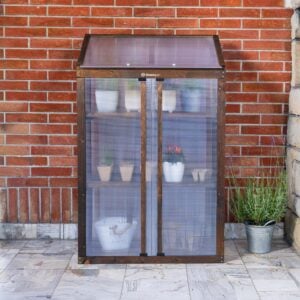
How to Extend the Gardening Season with a Mini Greenhouse? We Have a Specific Plan!
End of Winter and Early Spring – What to Sow in a Mini Greenhouse?
As early as March, you can sow (in containers) early vegetables in a mini greenhouse, such as radishes and lettuce. In favorable weather, the first-mentioned species can be sown at the beginning of March, the second from mid-month. Generally, seeds are sown in such a structure several weeks earlier than in the ground. Radishes are harvested directly from the mini greenhouse, so you should choose appropriately large and deep containers. Lettuce can be harvested or simply used to produce seedlings, which after a few weeks can be planted in the garden or in larger containers on the balcony.
Spring – April and May in a Mini Greenhouse
In spring, you can sow most vegetables in a mini greenhouse for seedling production. April is a good time to sow cabbage, broccoli, cauliflower, leeks, and lettuce. Additionally, annual herbs such as basil are sown. In May, you can continue sowing brassicas (only late varieties); and in addition, Brussels sprouts and kale. It is also worth sowing cucurbit vegetables for seedlings, such as cucumbers or melons. Remember that this is a group of vegetables that develops a delicate root system. Therefore, it is worthwhile to sow in biodegradable containers, such as peat pots, which are then placed together with the plants in the ground. Optionally, at the beginning of the month, you can sow seeds of “summer flowers” originating from exotic regions of the world. An example is the popular scarlet sage.
Late Spring and Summer – Growing Heat-Loving Vegetables and Herbs in a Mini Greenhouse
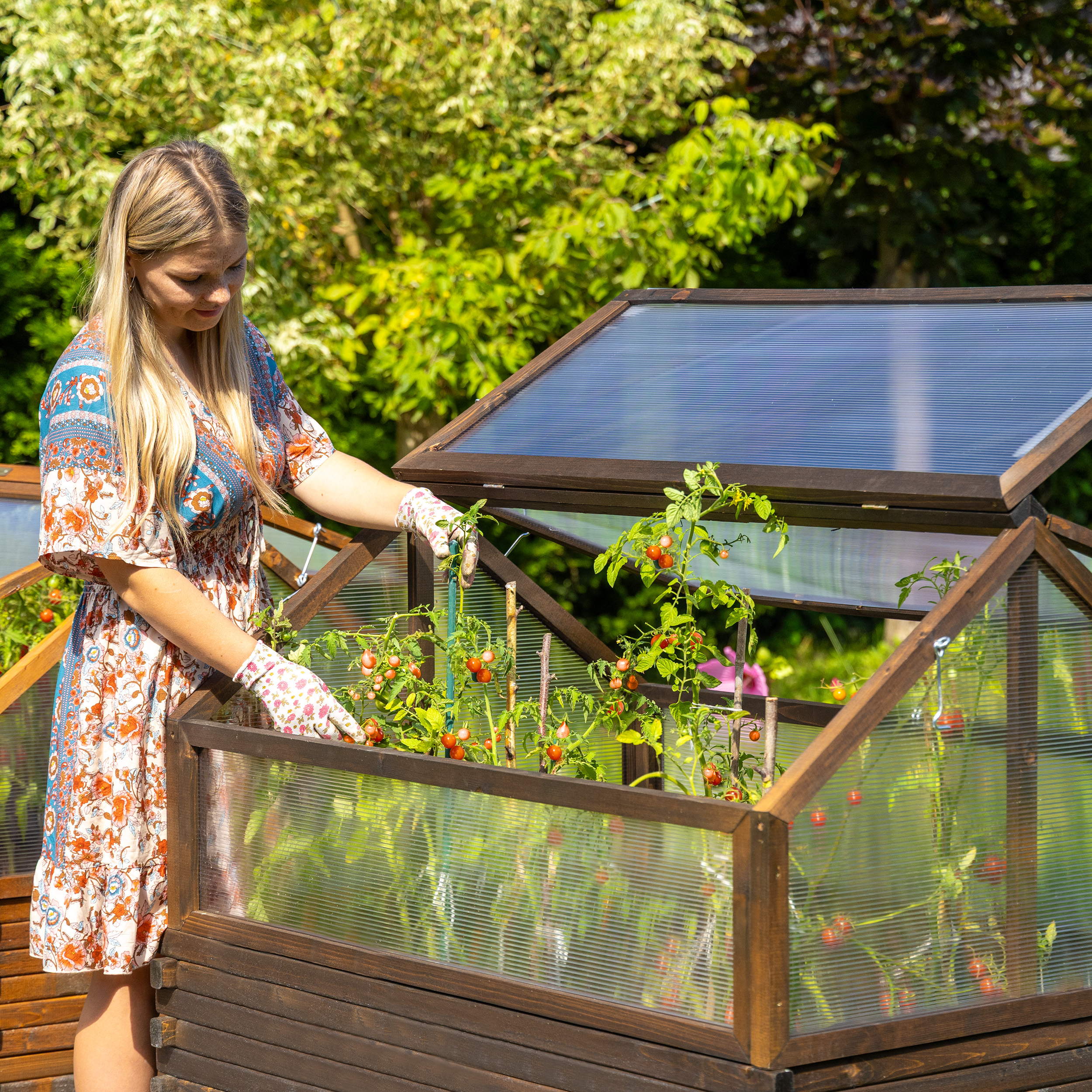
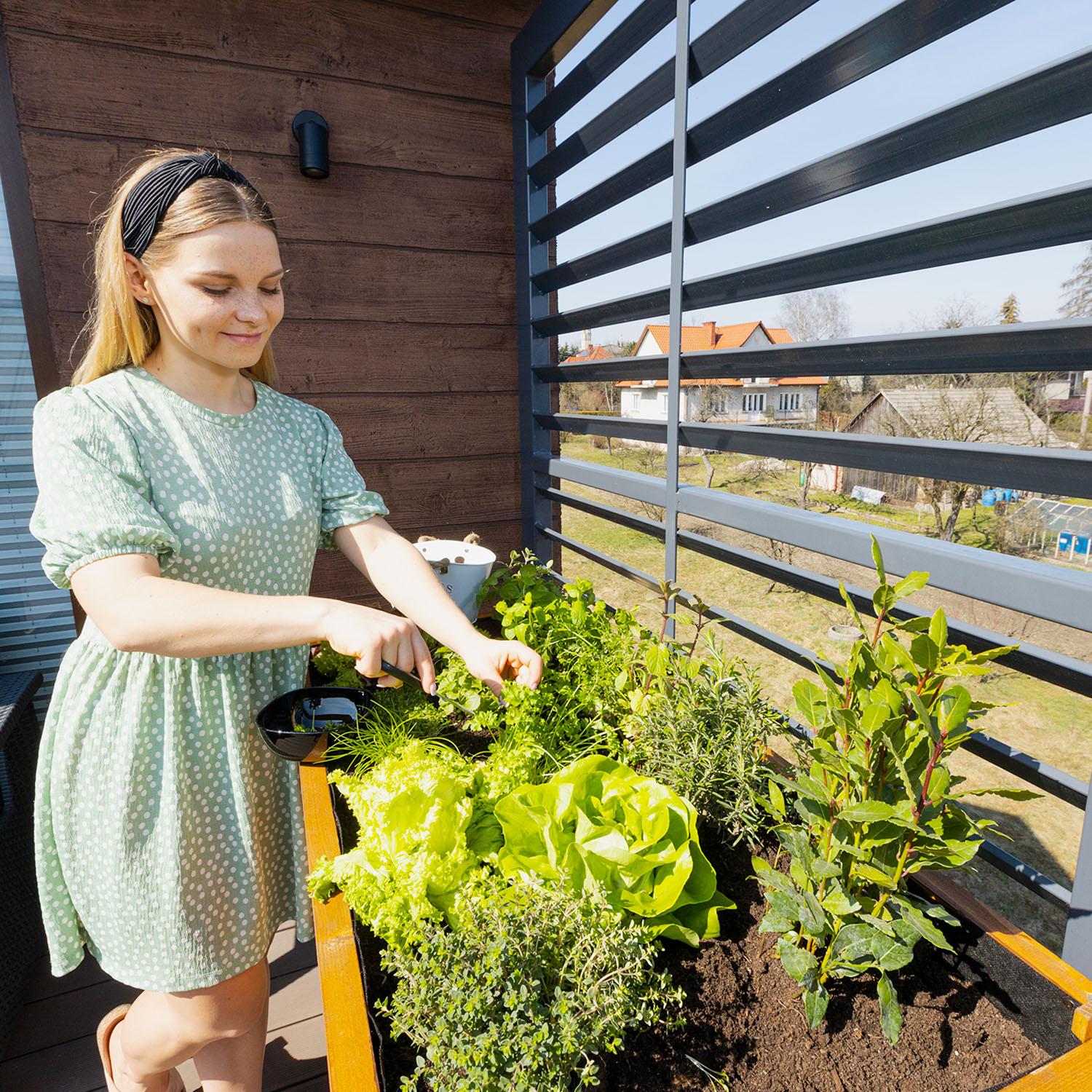
During this period, small heat-loving vegetables are most commonly grown. Cherry tomatoes do very well in pots, as do small peppers such as chili. A good idea is seasonal cultivation of annual herbs, providing constant access to your favorite seasonings.
Late Summer and Autumn in a Mini Greenhouse
In late summer and early autumn (September), you can sow autumn vegetables in a mini greenhouse. Choose species that provide leaves as an edible crop, such as corn salad and arugula. Kale is also sown, but you should be aware that it will not reach the same size as that sown in the ground. However, it can still be used in small quantities as an addition to soups, salads, and slaws. Additionally, radishes and spinach are sown in autumn. Harvesting is carried out throughout autumn and part of winter.
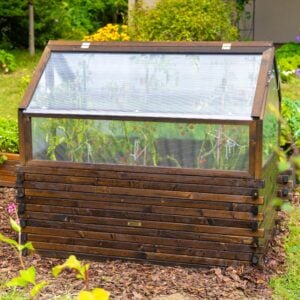
An Idea for a Mini Greenhouse – A Cold Frame That Further Extends the Garden Season!
Some mini greenhouses, such as Timber, are used as cold frames. In this case, plants are grown not in containers but in the ground. Such models are most often placed in the vegetable garden. They can be used to produce vegetable and herb seedlings even more efficiently than other structures. How to do this?
Before setting up the mini greenhouse, you need to properly prepare the area. Dig a pit of the same length and width as the purchased structure. The optimal depth of the pit is 50 cm. At the very bottom, spread a 20-30 cm layer of horse manure. Then wait a few days and cover it with 20 cm of fertile soil, such as vegetable or sowing soil. The manure acts as a heating layer that additionally raises the temperature inside the mini greenhouse. This allows seeds to be sown 1-2 weeks earlier than in other mini greenhouses. In this way, the gardening season is further extended.
FAQ. What Do Plant Enthusiasts Ask?
How to Use a Mini Greenhouse in Winter?
During winter, in addition to harvesting autumn vegetables, a mini greenhouse enables the storage of perennial plants grown on balconies, terraces, or in pots in the garden. Those species that are on the borderline of survival in the garden (such as protected rosemary) will successfully survive “under glass.”
When Is the Earliest You Can Start Growing in an Unheated Mini Greenhouse?
At the beginning of March, provided it is not very cold. A mini greenhouse increases the safety of crops, but you should still pay attention to the requirements of individual species and their reaction to cold. The temperature inside the mini greenhouse is higher than outside, but of course it is not as stable as in large polytunnels or greenhouses.
Which Plants Benefit Most from an Extended Season in a Mini Greenhouse?
This primarily applies to early spring vegetables (early crops) and late autumn vegetables. The former can be harvested earlier than in the garden, while the latter are not as exposed to damage during frosty winters, and the yield (although smaller) lasts longer. In addition, brassicas should be mentioned, as they have a long growing season and require seedling cultivation.
Does a Mini Greenhouse on a Terrace Work the Same as in a Garden?
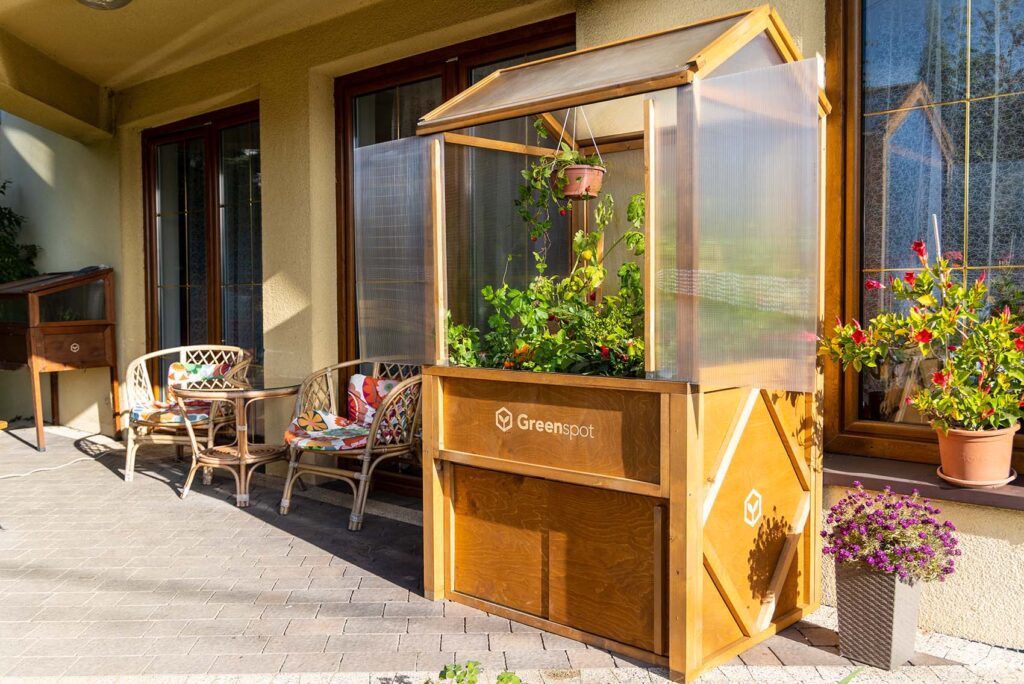
Yes, it makes no difference in terms of cultivation. You can grow the same plants on a terrace and in a garden. Only mini greenhouses that function as cold frames are not placed on balconies and terraces.
Mini Greenhouse vs. Typical Cold Frame – Which Solution Is Better?
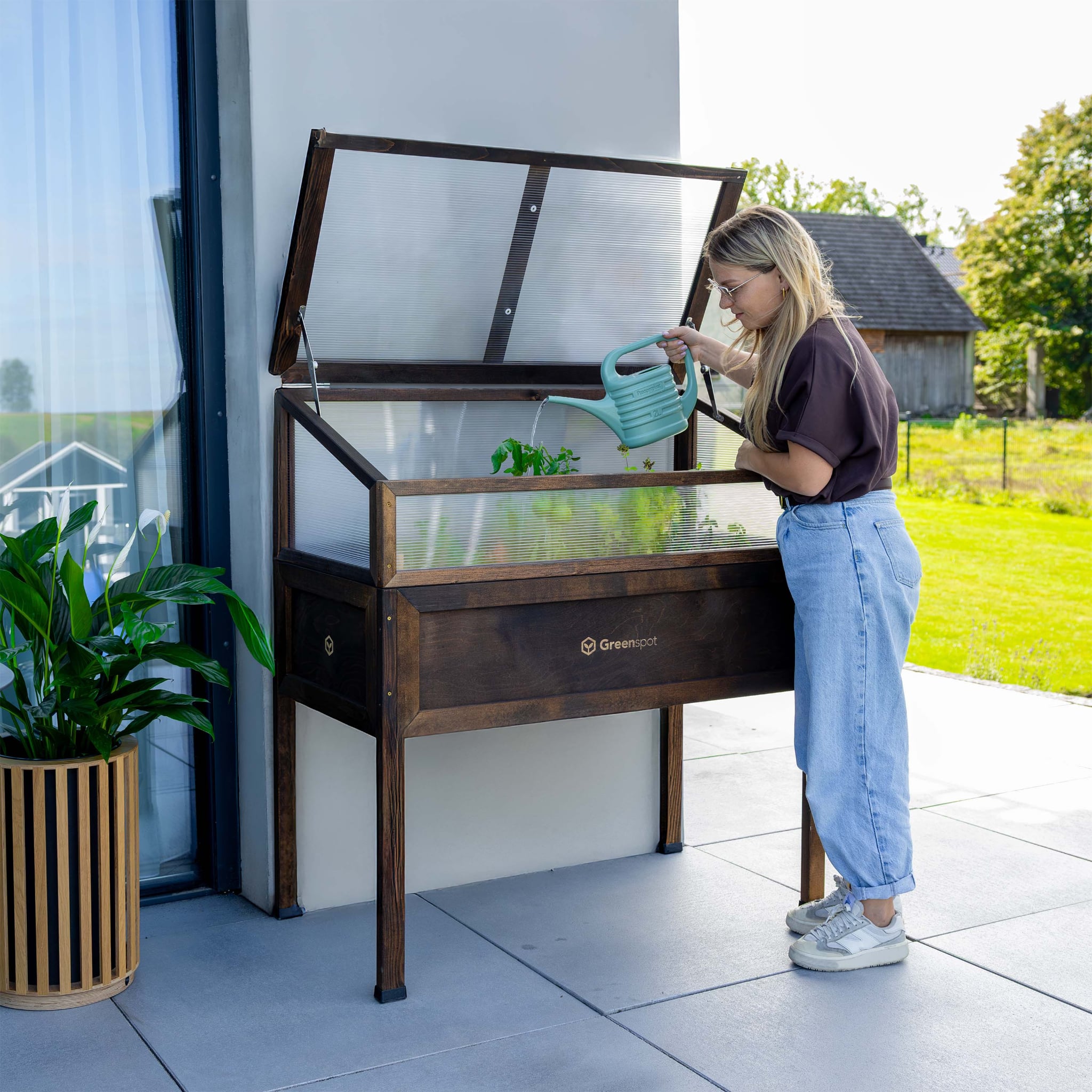
Plants in mini greenhouses are grown in containers, making them more functional. They can be placed on balconies and terraces. Vegetable seedlings are better grown in a mini greenhouse, for example in separate containers, as they grow more vigorously (more space) and are easier to transplant. However, some vegetables, especially root vegetables (such as radishes), may yield better in a cold frame. Much depends on the construction of the specific structure. A mini greenhouse shaped like a cold frame is generally more efficient than a DIY cold frame (such as one made from windows and bricks) because it provides more light.