Mini Greenhouse in the Garden and on the Terrace – Is It for Me?
A mini-greenhouse significantly expands cultivation possibilities on a terrace, and even when placed in the garden, it should not be considered a mere substitute for a greenhouse or polytunnel. It is beneficial to install it independently of these structures, as it fulfills different purposes. How can you properly utilize a mini-greenhouse? Discover if this type of structure and cultivation method is right for you.
A Mini-Greenhouse for Growing Plants? Why Not? See the Advantages!
A mini-greenhouse extends the gardening season by at least several weeks. This is particularly important for early spring sowing of vegetables, herbs, or even ornamental plants. It protects them from adverse weather conditions, resulting in lush and healthy seedlings. Additionally, they can be easily hardened off, for example, by temporarily opening the doors or roof of the mini-greenhouse for 1-2 weeks before planned planting in the ground. This is convenient, as there’s no need to move pots like with seedlings grown on windowsills. Furthermore, a mini-greenhouse is suitable for cultivating “experimental” plants, rare species, and varieties (e.g., asparagus lettuce, mustard greens, the hottest peppers, or pak choi).
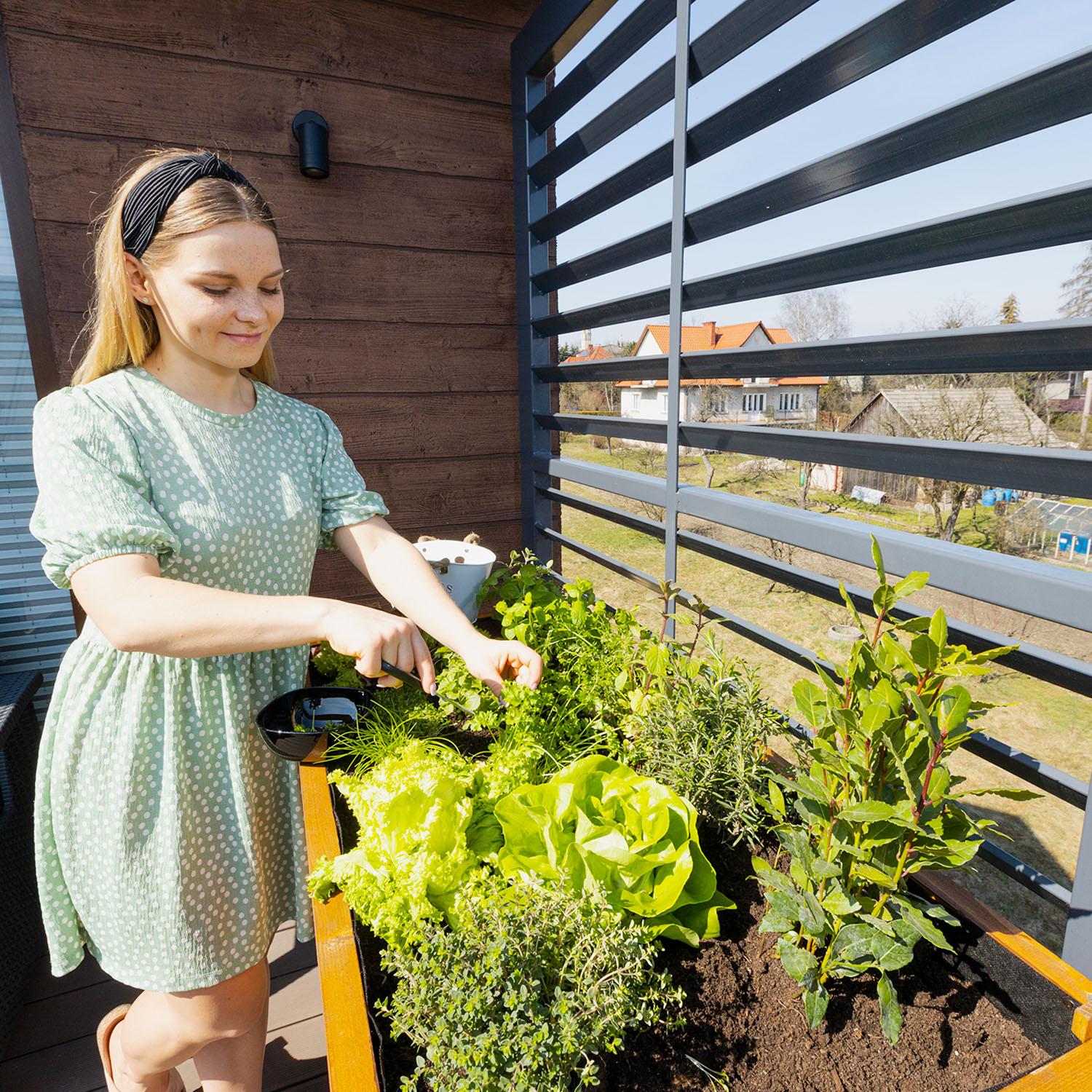
On a terrace, a mini-greenhouse simply increases the cultivation area. It allows you to plant heat-loving species that grow less vigorously and yield smaller harvests outdoors. It is also a practical way to ensure a supply of essential herbs for your kitchen.
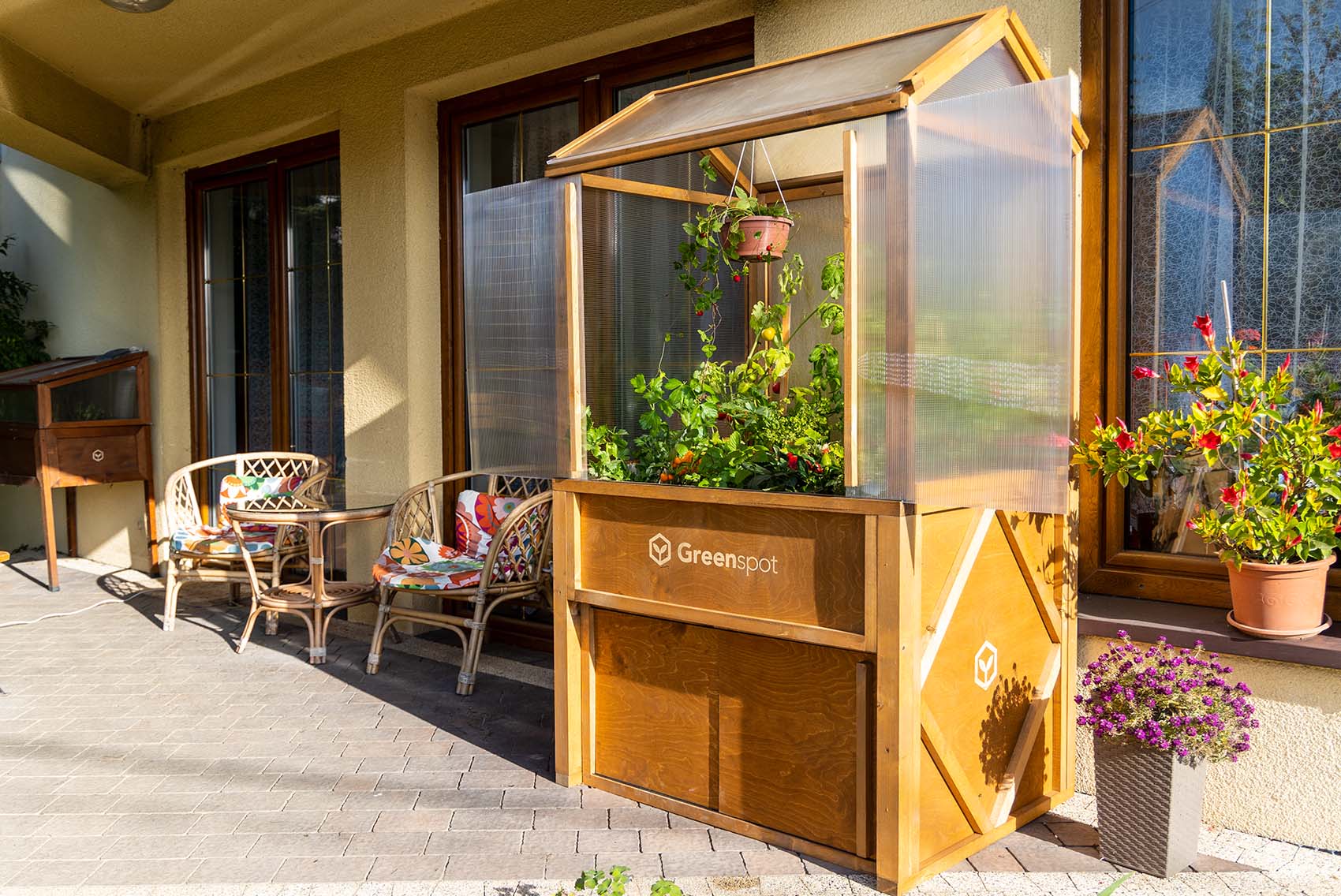
An advantage of mini-greenhouses is their decorative appearance. They do not “deter” like polytunnels; on the contrary, they are an attractive, elegant design element. They are constructed from wood, which is versatile. Their color scheme can be matched to a specific terrace or garden architecture.
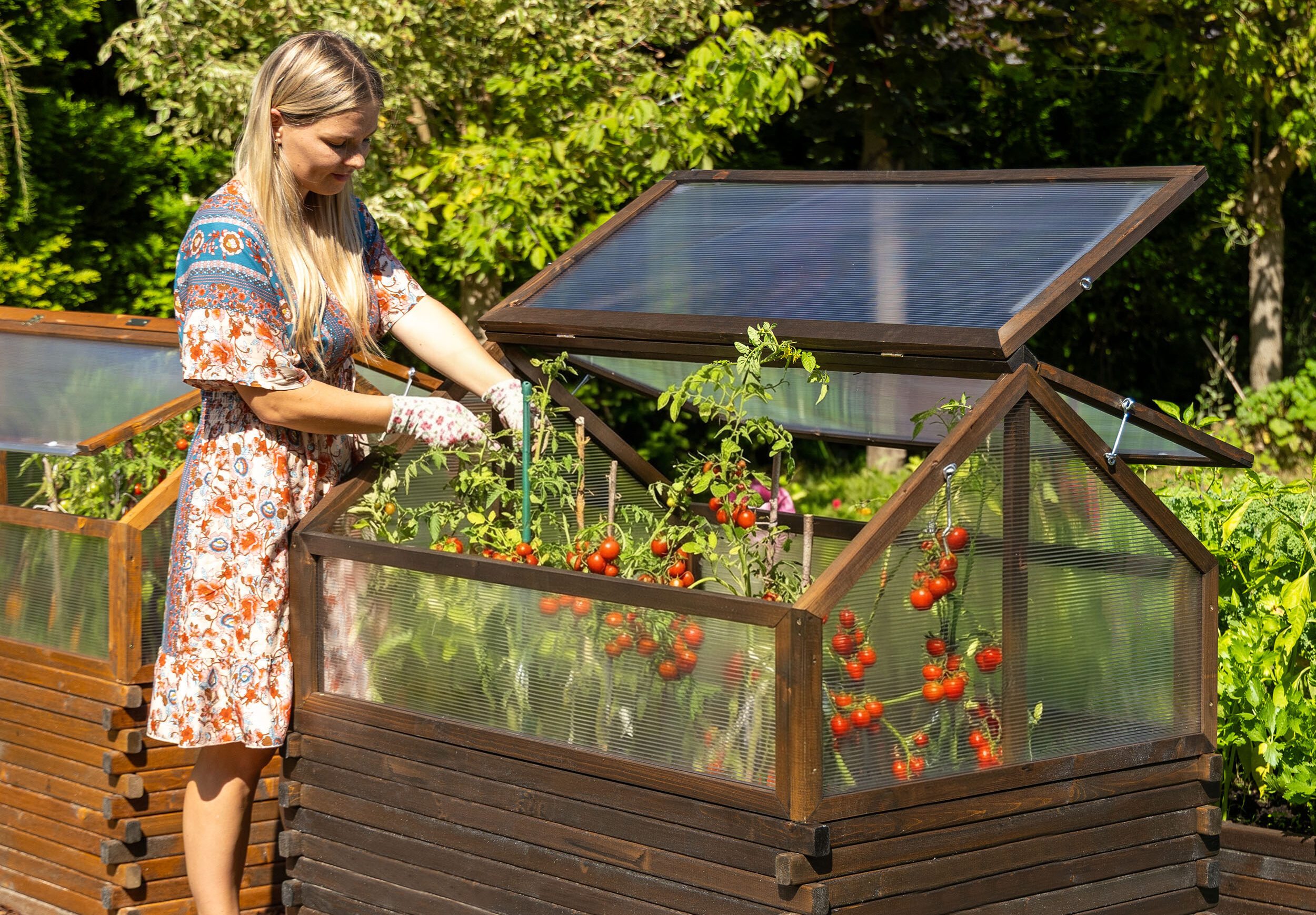
What Species to Grow in a Mini-Greenhouse?
The list of plants that can be grown in a mini-greenhouse is extensive. Much depends on our needs and individual preferences. However, edible species are most commonly chosen.
-
Among herbs, oregano, marjoram, thyme, mint, lemon balm, basil, and coriander are frequently selected.
-
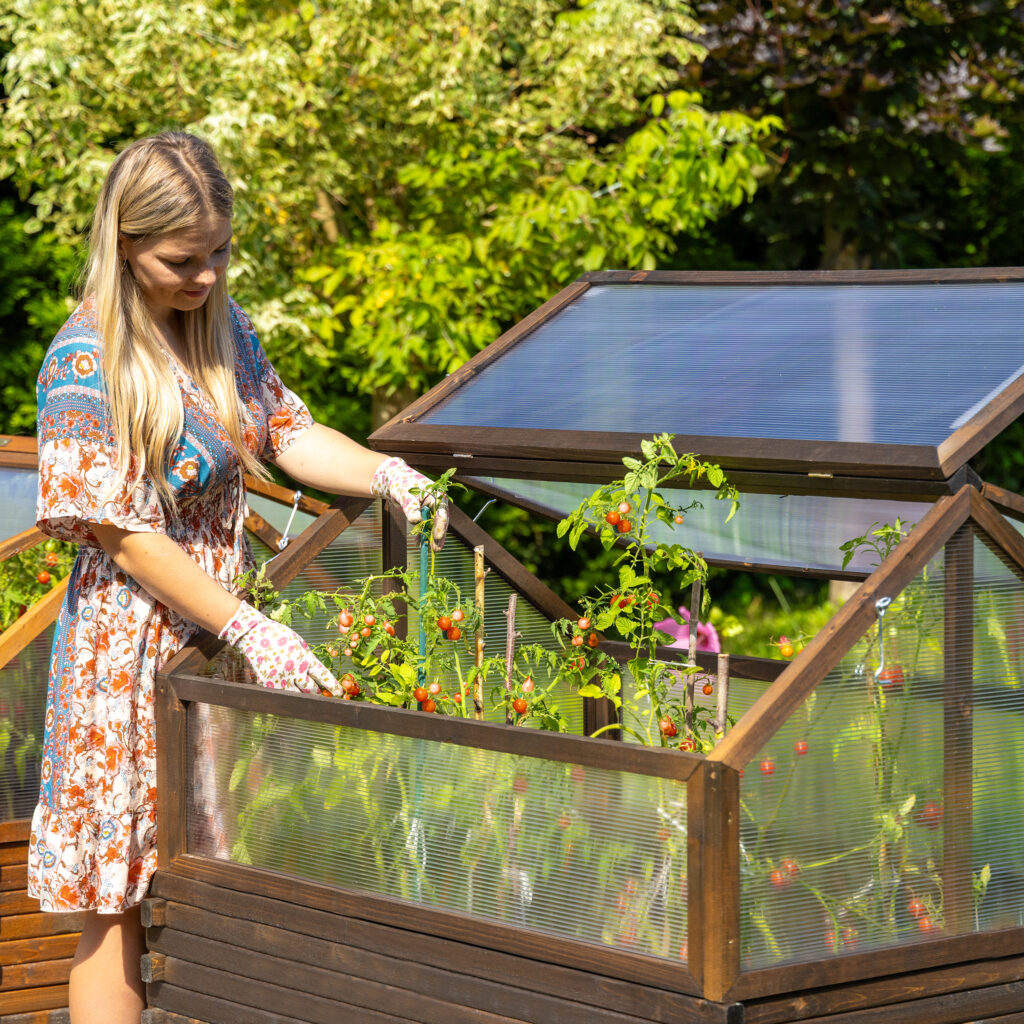
Cherry tomatoes, chili peppers (and other varieties), and various types of lettuce dominate among vegetables.
-
Almost all species grown from seedlings, which are later transplanted into the ground or separate containers (e.g., on a balcony or terrace), can be cultivated in a mini-greenhouse.
-
Additionally, it is worth considering a decorative mini-greenhouse to create a composition of summer flowers or a larger, more effective version of a “forest in a jar.”
-
An interesting idea is to grow natural sweeteners that replace sugar, such as stevia.
How to Grow Plants in a Mini-Greenhouse?
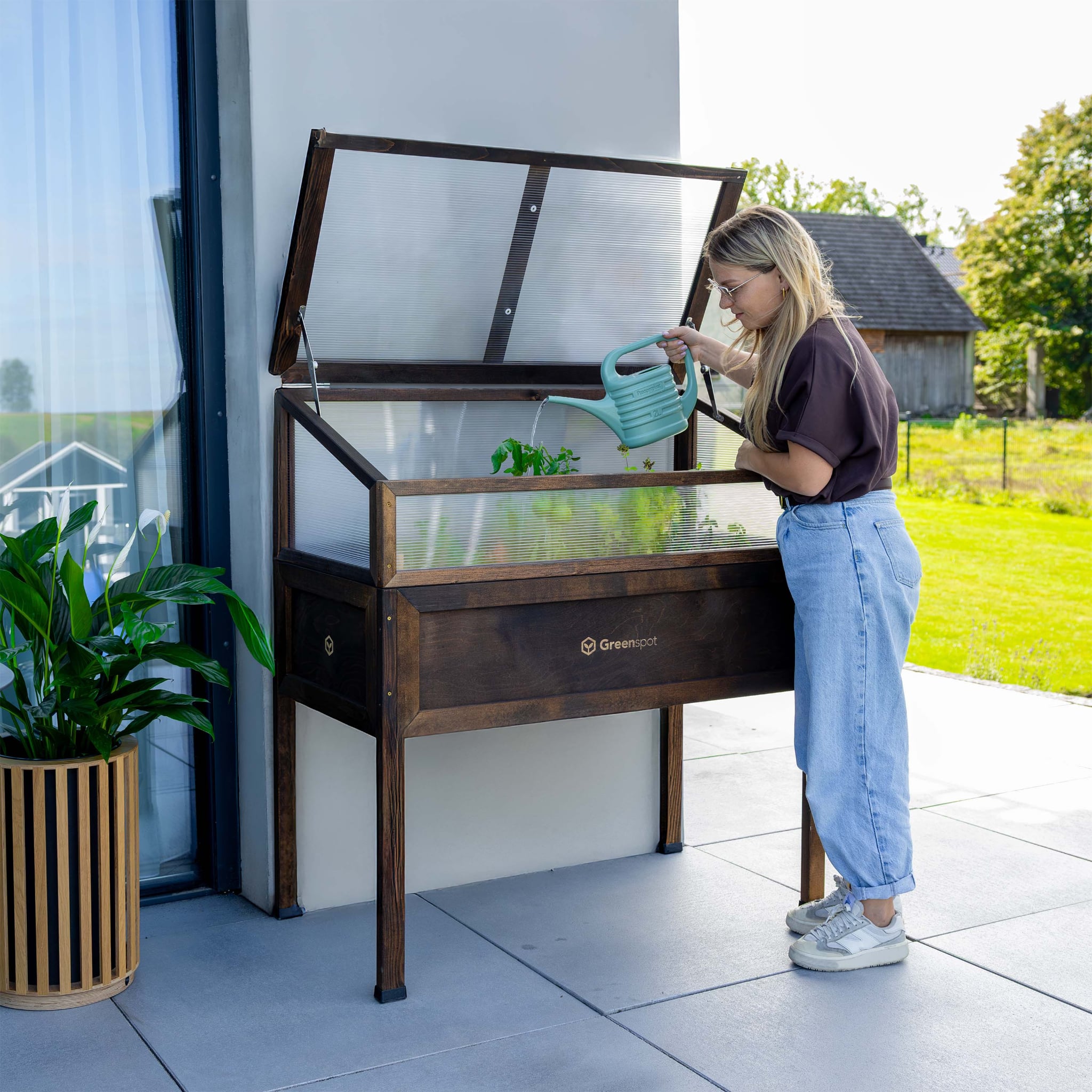
Cultivation in a mini-greenhouse does not differ significantly from growing in pots. Plants are watered less frequently, and care should be taken not to overwater. Under the glass, a favorable microclimate with increased temperature and air humidity is created. Of course, this should not be overdone, which is why mini-greenhouses (especially during heatwaves) should be ventilated. Herbs should be pinched to encourage bushier growth. Other care treatments depend on the cultivated species. Due to the enclosed nature of a mini-greenhouse, pest pressure is reduced. While they cannot be entirely excluded (they are clever creatures that can find any gap), such problems generally occur much less frequently.
Arranging a Mini-Greenhouse in the Garden and on the Terrace – Where to Place It?
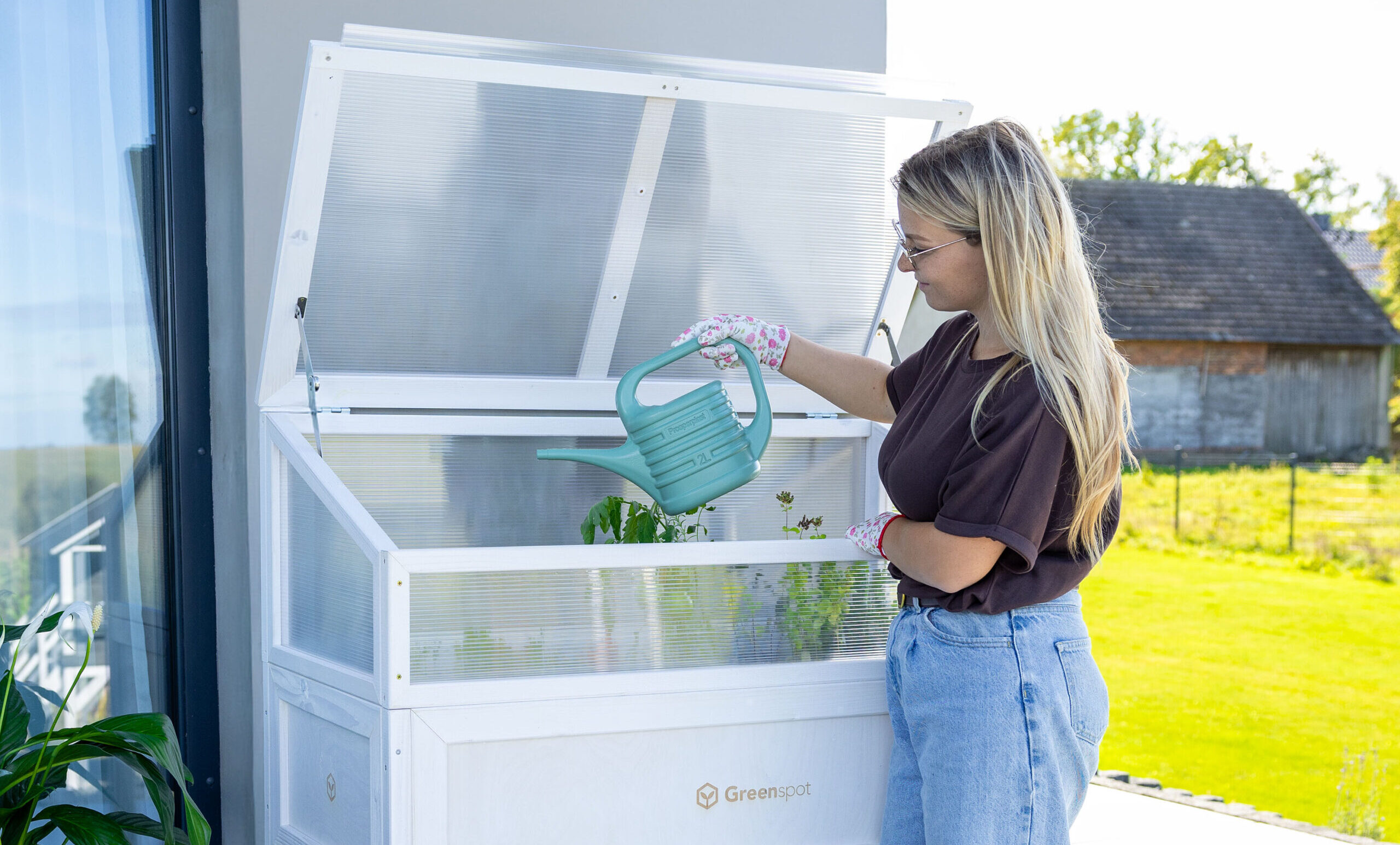
Mini-greenhouses are usually placed close to walls, such as facade elements on a terrace and house, an outbuilding, a large gazebo, or a garden shed. This provides shelter on one side, beautifully showcasing the cultivated plants, while also protecting them from the effects of precipitation. It is recommended to place them under a roof in a location that receives as much light as possible, which can be diffused (this, of course, depends on the choice of species and their requirements). Dark north-facing exposures are generally avoided. On a terrace, it is worth placing a mini-greenhouse next to large wooden planters with plants. This evokes the cherished rustic style. Some greenhouses, such as Timber, are designed as cold frames and are most often placed in a chosen spot in the vegetable garden.
FAQ. What Do Plant Enthusiasts Ask?
Does a mini-greenhouse actually accelerate plant growth?
Yes, the temperature inside the greenhouse is, on average, several degrees Celsius higher than the ambient temperature. This accelerates germination and plant growth. At the same time, the greenery is not as exposed to drought as in container cultivation, which eliminates another potential growth-inhibiting factor.
Is a mini-greenhouse on the terrace stable during strong winds?
Yes, the structures are heavy enough not to be susceptible to overturning or shifting due to wind. Generally, mini-greenhouses are most often placed against walls, as this is the most functional arrangement, meaning it does not hinder movement on the terrace. This also provides additional protection from the wind.
Can mini-greenhouses be placed in an open area in the garden?
Yes, they are constructed from impregnated wood, so their durability is similar to other wooden objects, such as garden architecture. Of course, a mini-greenhouse placed under a roof will last even longer. Mini-greenhouses located in open areas should be maintained at least once every few years.
How to ensure ventilation in a small greenhouse to prevent plants from rotting?
Mini-greenhouses should be ventilated, for example, for 15-30 minutes daily. During summer, especially during heatwaves, the roof can be opened for several hours. Excessive temperature and humidity are undesirable and can be as harmful as cold and dry air. You can purchase a hygrometer to check the air humidity inside the mini-greenhouse, even out of curiosity. The optimal parameter is around 60-70% (universally, i.e., for most plants).
When to sow plants in containers located in a mini-greenhouse?
It can be assumed that sowing seeds, e.g., vegetables, is done 2-3 weeks earlier than in ground cultivation. This applies to mini-greenhouses located outdoors, such as in the garden or on an uncovered balcony.