Raised Bed – Everything You Should Know About It
Raised beds are no longer limited to gardens; such structures can be successfully introduced to balconies and terraces. They look aesthetic, help maintain order, and simultaneously enable the creation of plant arrangements. Mini vegetable gardens or herb gardens are often established in them, but they are also suitable for flower beds. What should you know about raised beds?
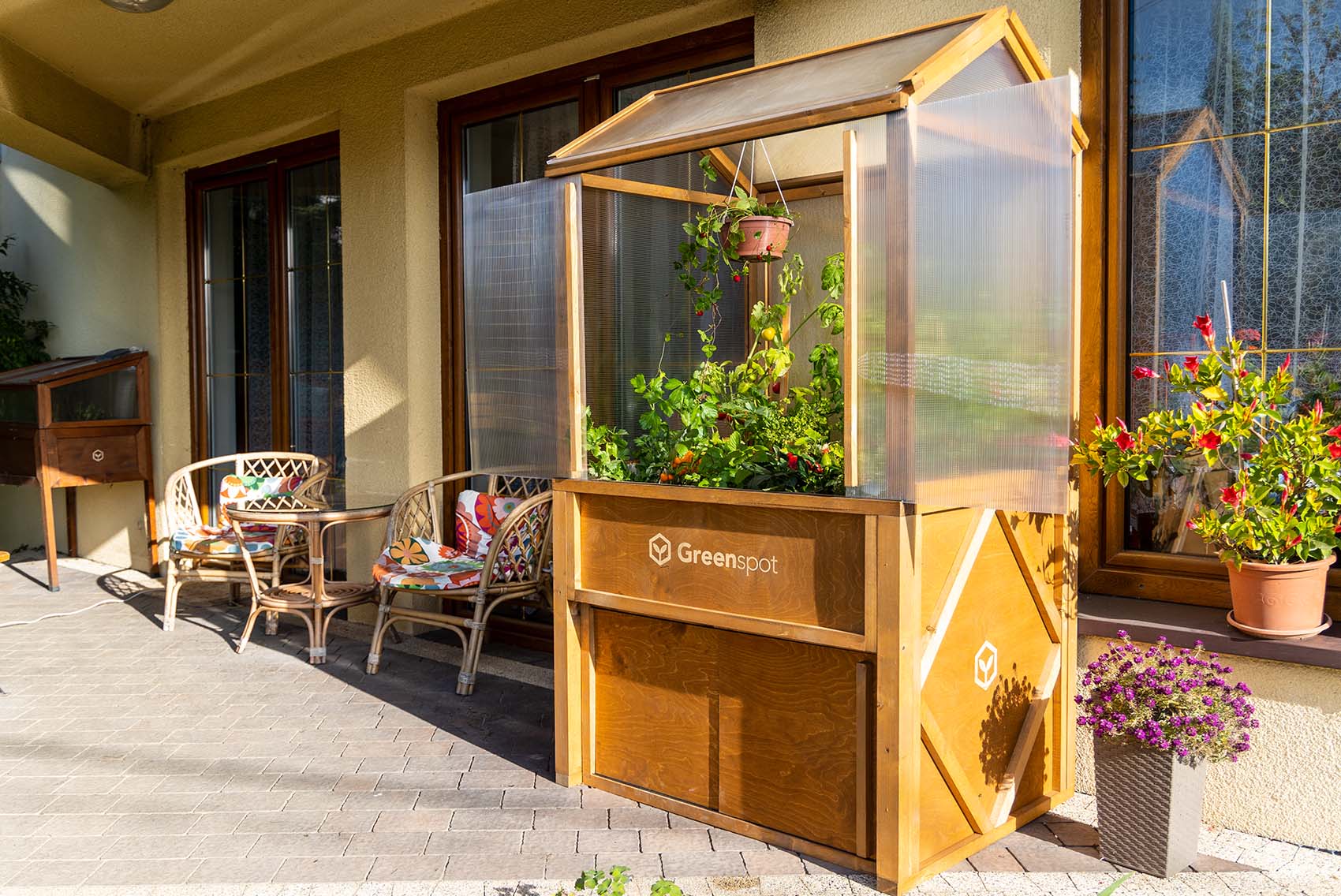
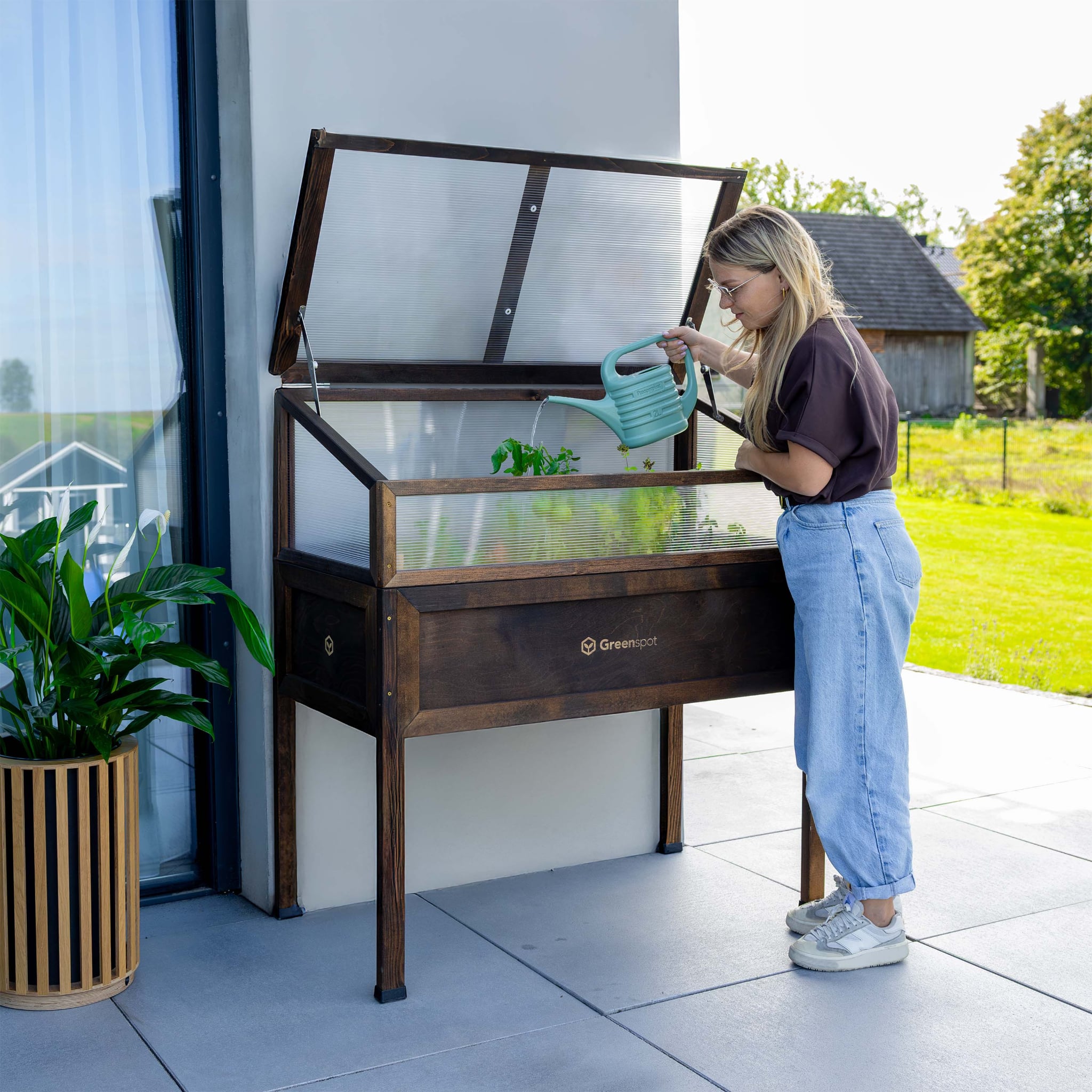
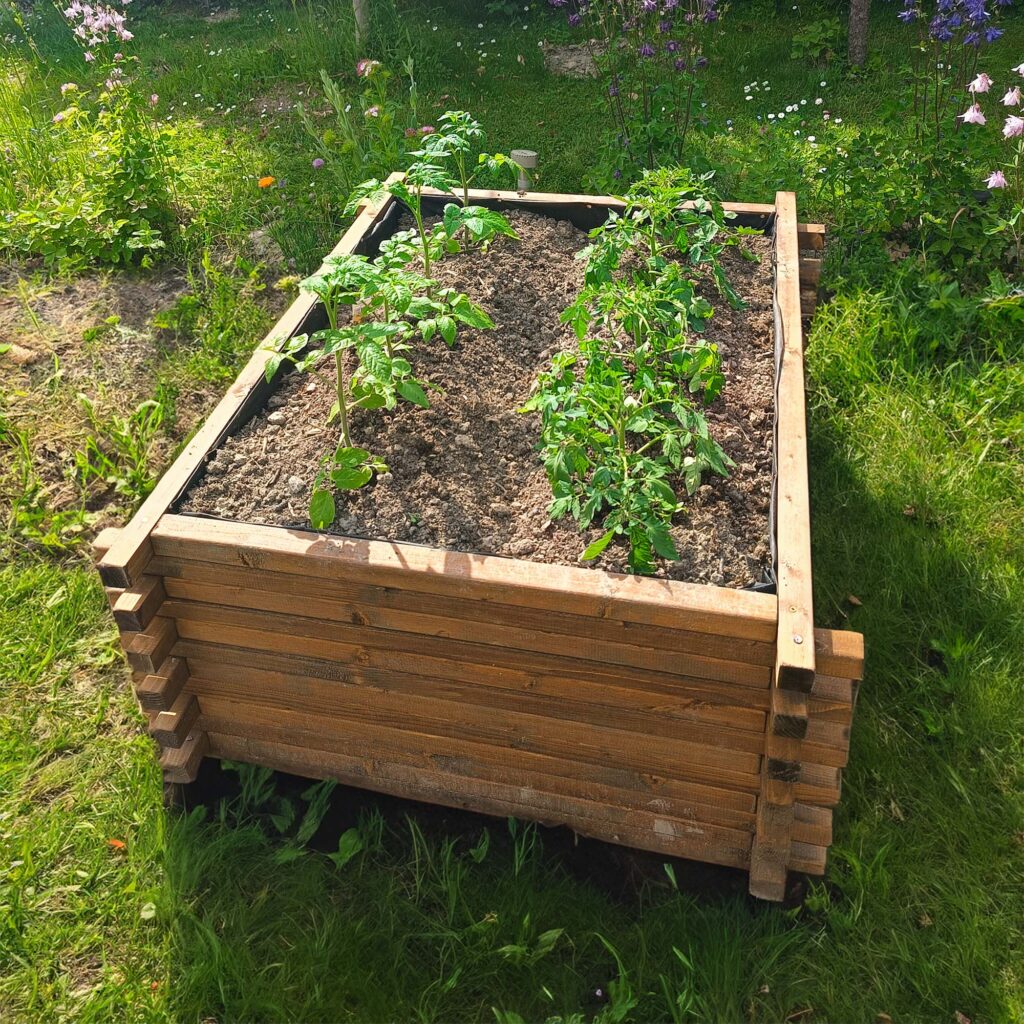
A raised bed for balcony, terrace, or home is a structure in the form of an elevated box on legs, with a strong and stable construction. Plant cultivation compared to traditional containers (e.g., pots) is more efficient. What are the greatest advantages of raised beds?
1. Universal Application of Raised Beds
Raised beds with vegetables, herbs, or ornamental plants can serve various functions on a balcony or terrace. They are typically practical objects (cultivation for harvest) or serve as unconventional decoration for given spaces. At the same time, ornamental and edible species can be combined. This philosophy of ornamental vegetable gardening has existed for centuries. In the garden, it is known as “potager.” Therefore, nothing prevents transferring this concept to wooden raised beds on “legs.” Flower beds can serve as screening walls. Simply plant ornamental climbing plants. Some of them are grown on stakes or trellises, while others are allowed to grow freely. This way, a tiered, living “wall” is created. A raised bed is an excellent proposal for an organized herb garden. Raised beds are used for growing basil, savory, mint, marjoram, and thyme, among others.
2. Raised Beds = Maintenance Convenience
Raised beds compared to cultivation in traditional containers (freestanding pots and boxes) are significantly more convenient. As the name suggests, the growing area is elevated. Therefore, performing all maintenance tasks, from planting to fertilizing and later harvesting, is comfortable. There is no need to bend down and strain your back, as plants can be tended to (and simultaneously admired) in a standing position. At the same time, this is a user-friendly solution for elderly or ill people.
3. Easier Plant Cultivation in Raised Beds
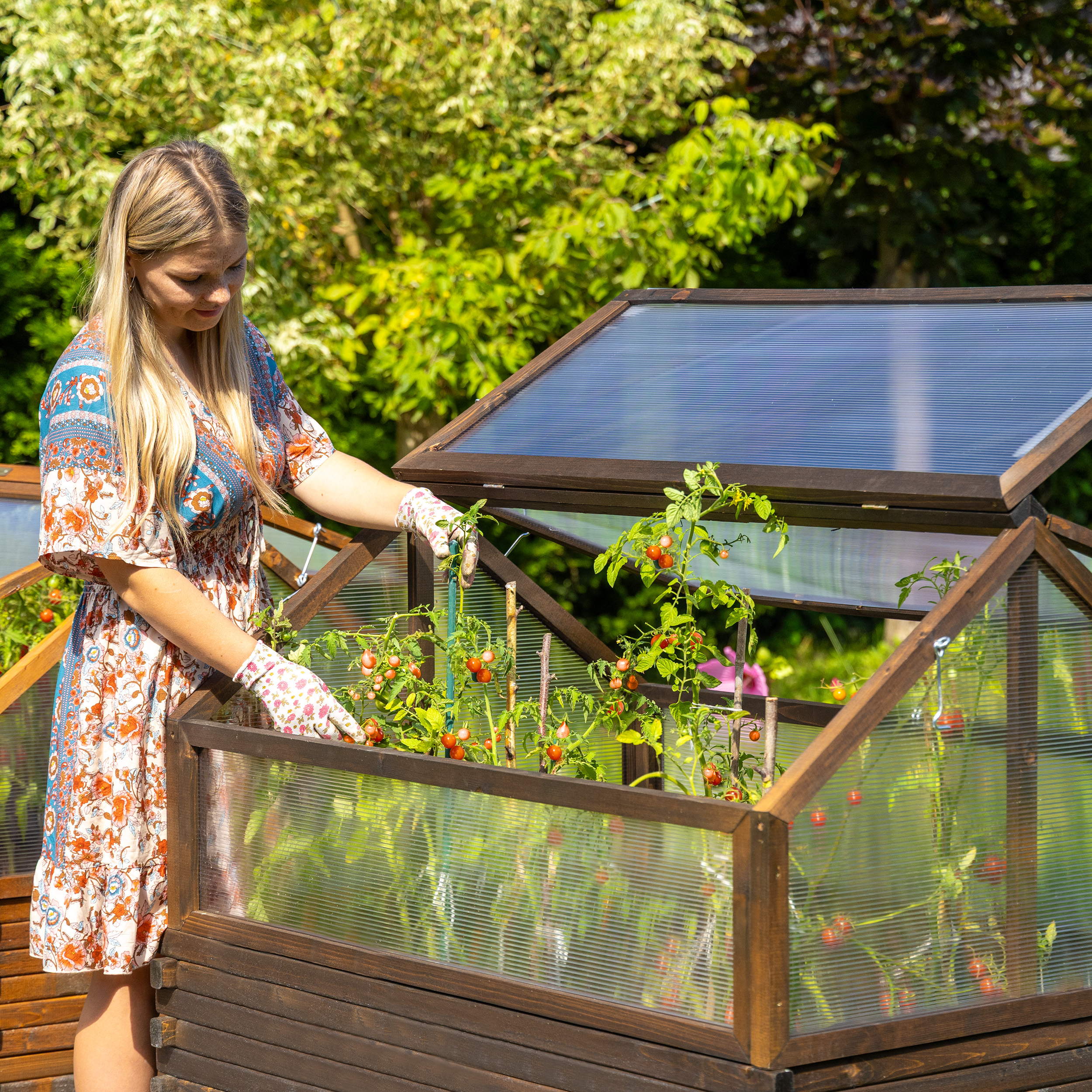
Raised beds have a large growing surface and good depth (25-30cm). Consequently, they are more beneficial for the development of plant root systems. The substrate dries out more slowly, and thanks to the wooden construction, it is not exposed to heating (unlike plastic containers). Gathering several plants in one place makes it easier to carry out individual maintenance procedures, such as protective treatments. Of course, before sowing and planting, you need to check which plants have similar light and soil requirements, as well as similar growth rates (so that vigorously growing plants do not overshadow weaker ones). When growing vegetables or herbs, it is worth checking good companionship. Many species “support” each other by releasing substances that stimulate growth or repel pests, among other things. This plant property is called allelopathy.
4. Raised Beds Mean Order on Balconies, Terraces, or Any Other Location
Raised beds in the form of structures on “legs” allow for maintaining order and aesthetics in the growing area. They help avoid a “motley” hodgepodge of many different pots and boxes. Plants can be grown within species or combined into compositions as desired. This way, flower beds, vegetable beds, and other types of cultivation are created. Several raised beds placed next to each other (or mini-greenhouses) will allow you to build an impressive, low “wall,” for example, serving as screening. At the same time, you can utilize the space underneath the bed by placing smaller pots with plants, lighting, or decorations there.
5. Construction Solidity and Durability
Wooden raised beds guarantee good durability, resistance to adverse factors, and longevity for many years. In this regard, they are more practical than traditional containers. The wood is treated, which protects it from moisture and UV rays. Of course, after years, it is worth repeating the maintenance treatment. Access to plants is unrestricted. All of this contributes to the high functionality of the construction.
Many different groups of plants can be grown in raised beds – from ornamental annual species to herbs and various vegetables. At the same time, the constructions are compact enough that space can be found for them on almost any balcony, terrace, or even indoors.