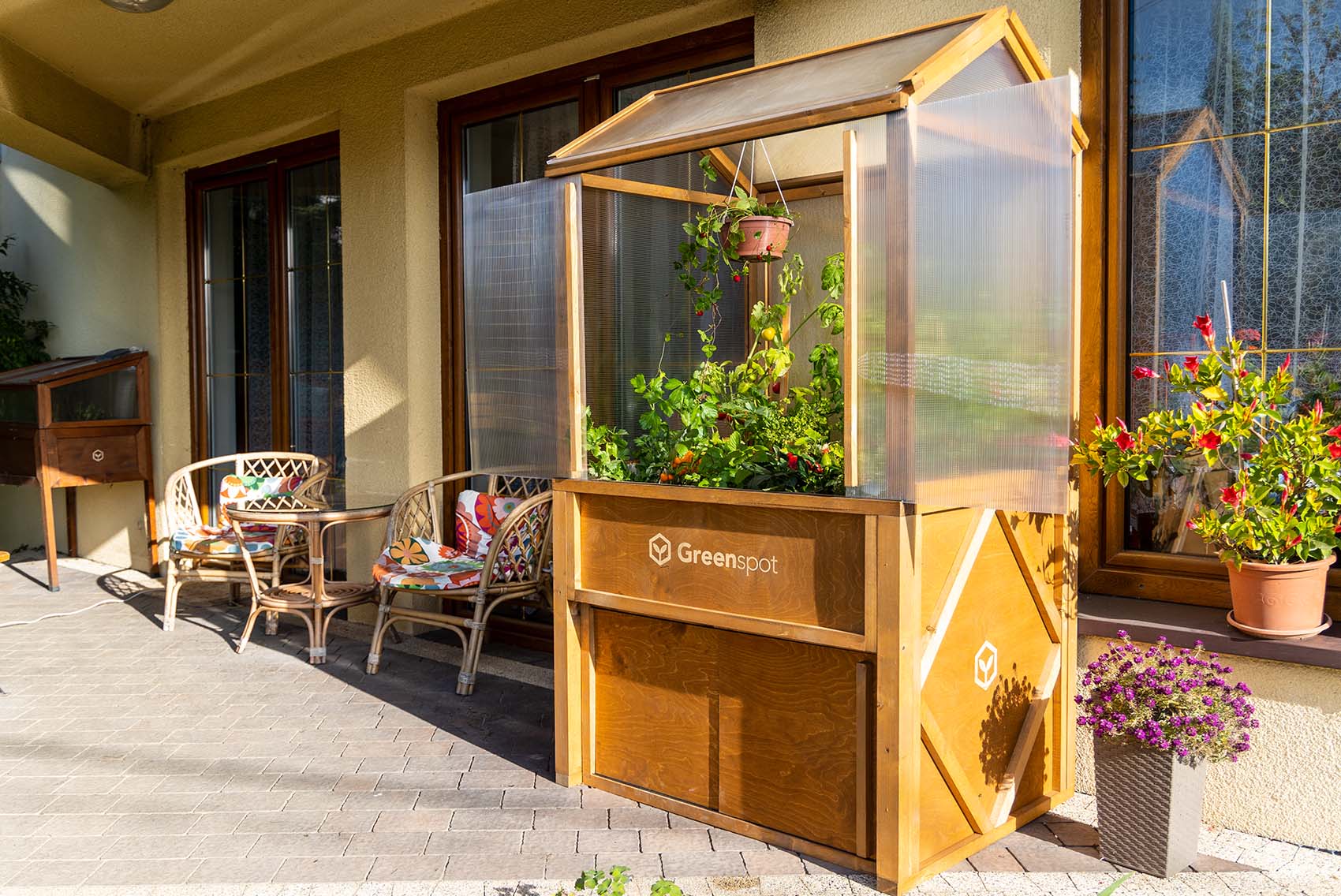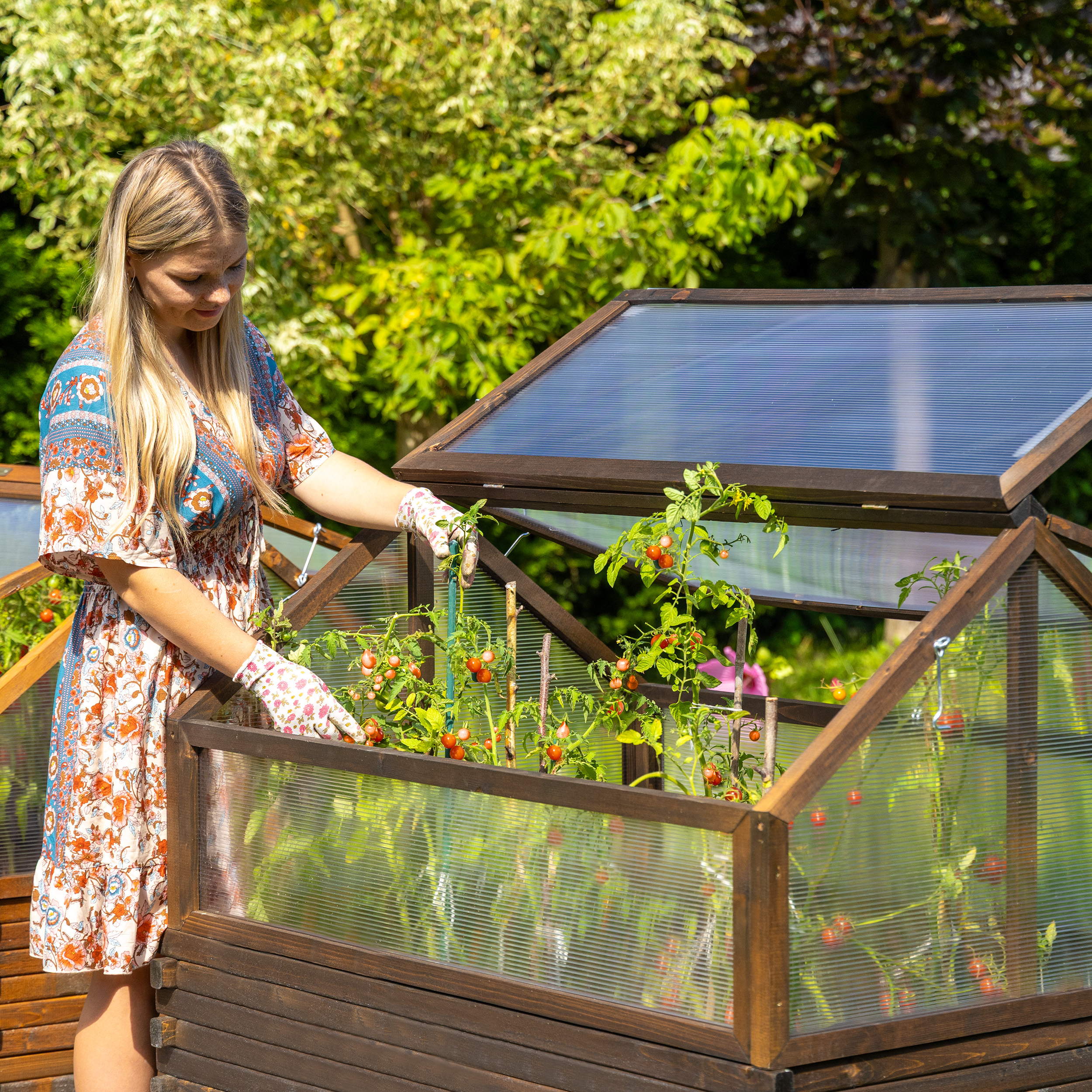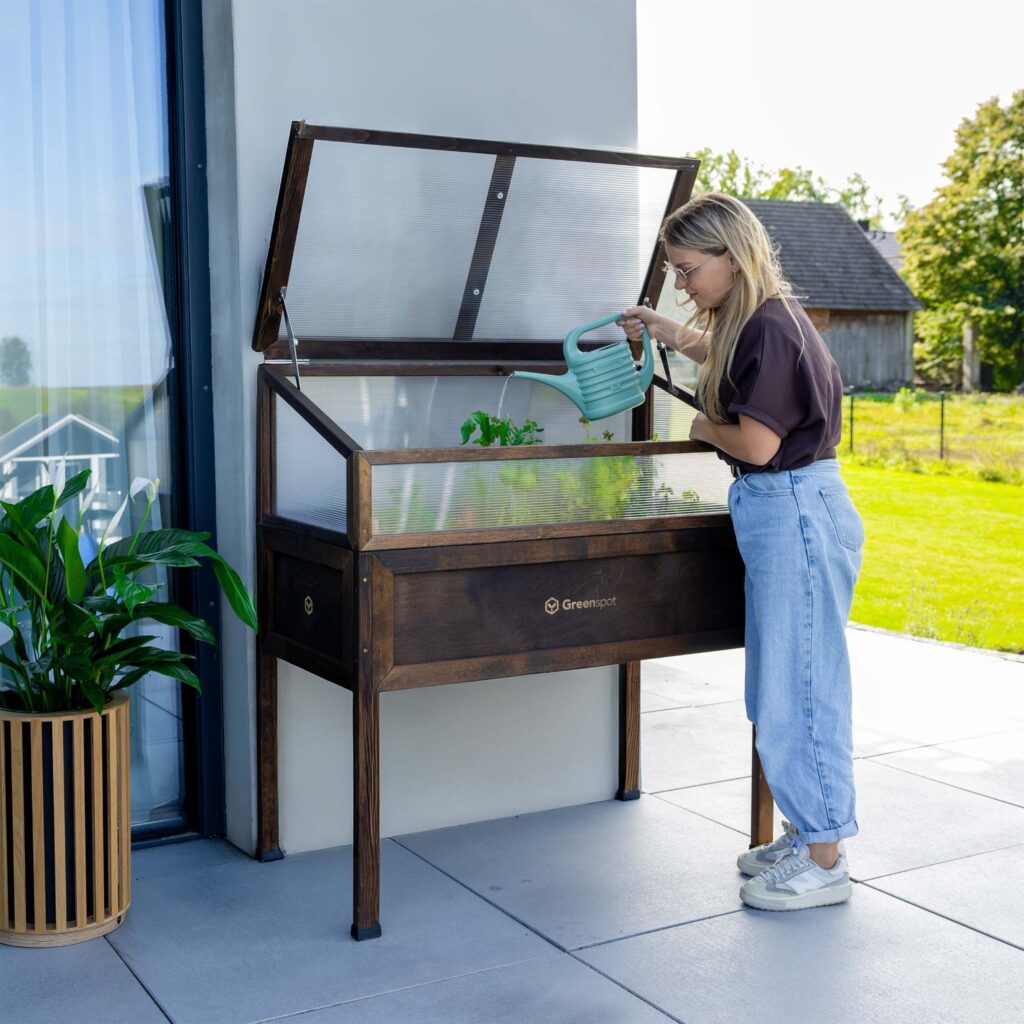
What herbs and vegetables can be planted in a Mini greenhouse on a terrace or balcony?
Fresh vegetables and herbs added even to the simplest meal can completely transform its taste. However, sometimes despite our best intentions, our cultivation looks poor. Why does this happen? It turns out that some plants simply “don’t like” each other, and planting them next to each other can result in poorer outcomes. To avoid this and enjoy beautiful specimens in your own balcony garden, we suggest which plants can be combined and which combinations are better to avoid.
Technical Considerations
First, we must consider the technical aspects, as our raised bed has limited dimensions, which means not all vegetables, fruits, and herbs can be planted in it. Two factors need attention here – the maximum plant height and root length. The stem height should not exceed 45 centimeters, and root length should not exceed 25 centimeters. Contrary to appearances, this provides wide possibilities, as most plants chosen for balcony cultivation fit within these ranges. So the question remains, which plants can be combined to fully utilize their potential? Below, we provide the most popular combinations you can use on your terrace.
Good Neighbors – Pair These Plants Together
Your terrace garden is sometimes exposed to various insects. Interestingly, you can significantly reduce this risk by combining different plants. Which pairs work well and in what cases? See below:
- strawberries and onions – reducing the risk of gray mold,
- carrots and onions – they mutually repel insects that feed on vegetables (e.g., onion fly and carrot fly),
- dill and carrots – dill’s aroma repels pests (including those that feed on onions).
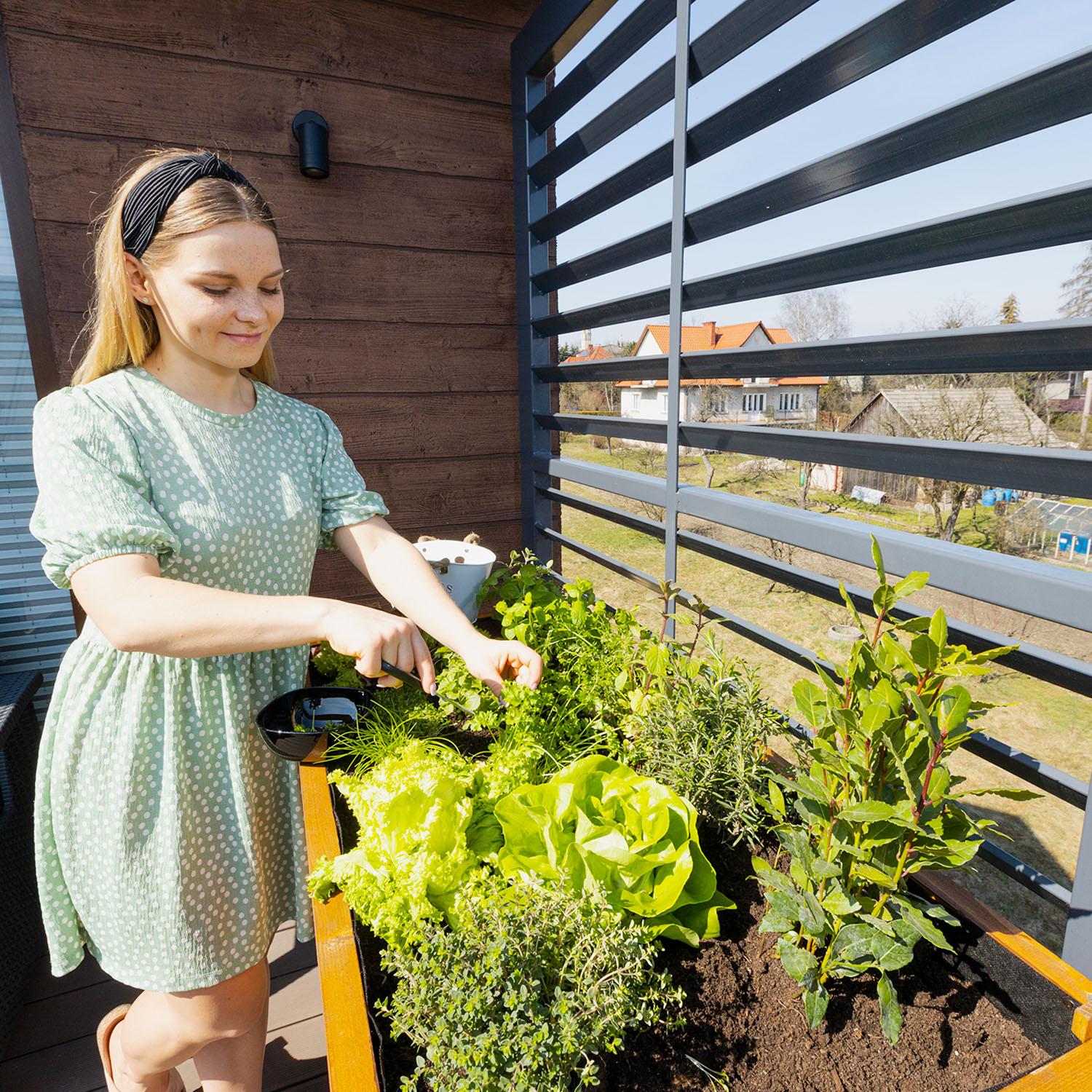
Additionally, in your herb garden, you can sow savory, which repels aphids and ants, helping to protect your crops. Mint and basil also work great together (remember that mint grows extensively, so it’s worth burying it in an additional container to limit its growth), as do lovage and tarragon, and chives with parsley leaves. Such pairs will have a positive effect on each other, resulting in beautiful harvests.
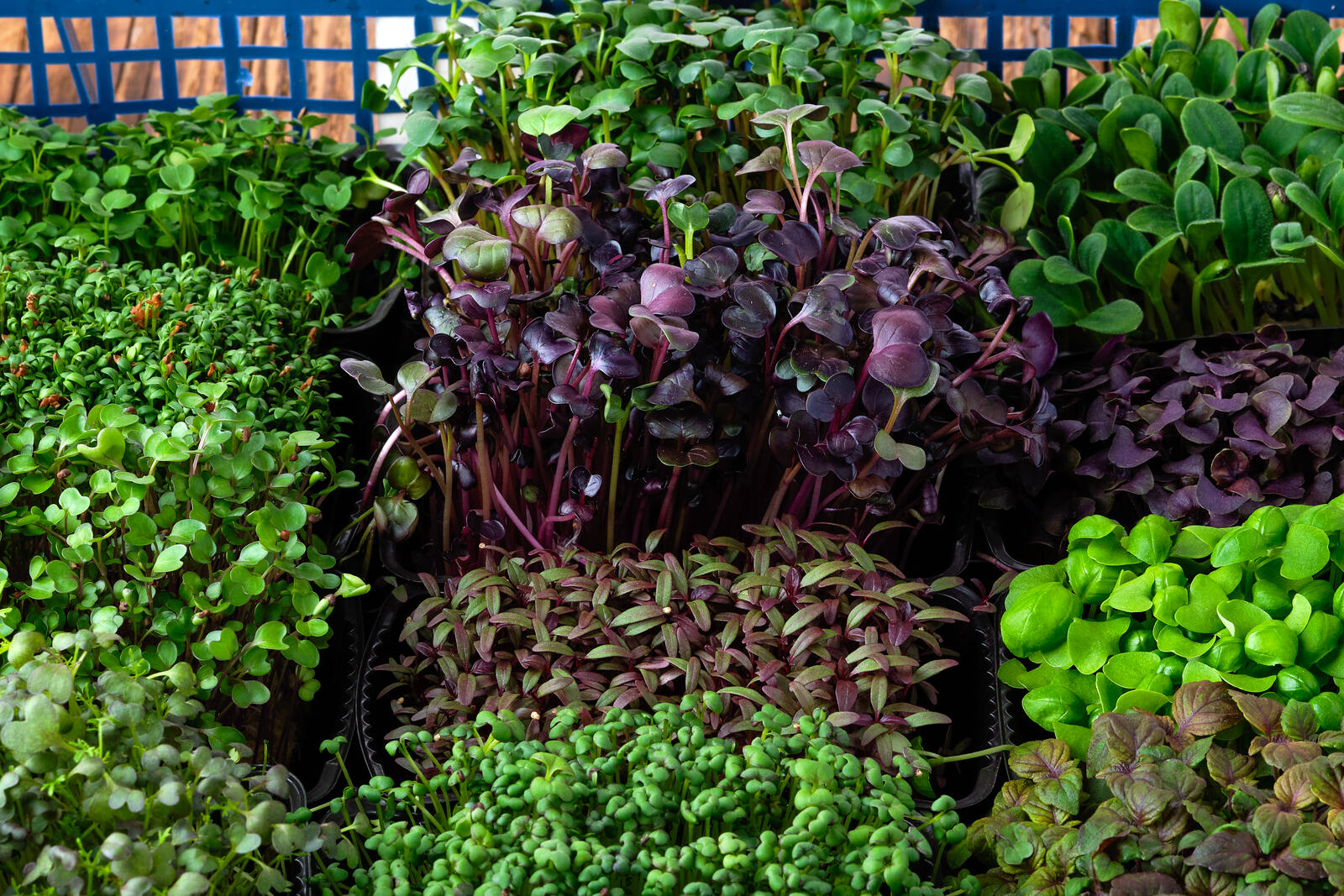
Which Plants Should Not Be Planted Next to Each Other?
There are plant pairs that have a neutral effect on each other, so they can also be combined. However, there are also those that have a negative impact on each other, and such combinations should be avoided. What are these combinations? We present again the most popular ones that can be found in raised beds, which we personally discourage. Why? Improper plant selection can inhibit the growth of at least one of them or even act parasitically.
The most demanding plant is arugula, which basically only tolerates its own company. If you have relatively limited space, you should probably skip it. And other pairs? Parsley doesn’t get along with kale, and onions don’t like radishes. Herbs are less demanding in this respect, but one issue to pay attention to is their too rapid growth. This can be limited through systematic transplanting or hiding the selected plant in a smaller pot, which will act as a sort of brake.
Balcony Herb Garden and Combining Herbs and Vegetables
Naturally, a herb garden on a balcony or terrace has limited space, so plants must be chosen wisely. On the other hand, you’d want to maximize its potential and always have fresh vegetables, herbs, and even fruits at hand. This is possible because the 100-centimeter length allows for planting even plants that theoretically don’t work well together. However, this should be done at its two different ends, and between them, plant such herbs or vegetables that will be at least neutral towards each other. This way, you’ll create a home vegetable garden that will allow you to enhance the taste of everyday dishes. We hope that our above list will help you select the best pairs for your raised bed.