Mini greenhouse – growing herbs and vegetables on your own balcony
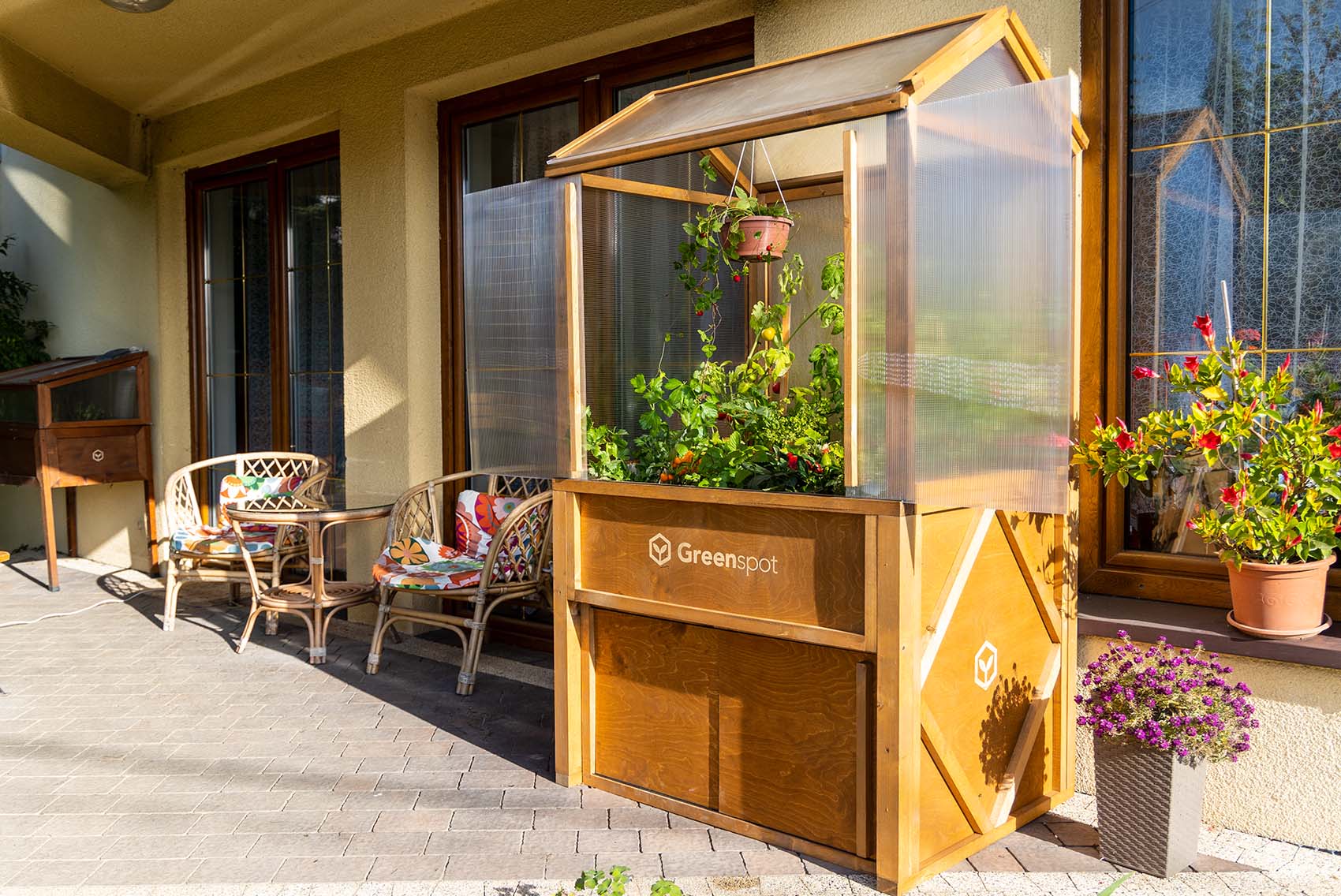
A mini greenhouse offers great possibilities for growing vegetables and herbs on a balcony or terrace. It allows for earlier sowing, enjoying early spring crops, and cultivating heat-loving and less common species. What to sow and plant in a “home” mini greenhouse?
Mini greenhouse and effective cultivation of early vegetables
A home mini greenhouse enables earlier harvests of early vegetables. The difference can be up to several weeks compared to traditional sowing in the ground or regular containers. This allows you to stock up on fresh greens during a critical period when the diet lacks vegetables. In a wooden, glazed mini greenhouse, you can grow radishes, various varieties of lettuce, endive, Swiss chard, and parsley for leaves. At the same time, plants in your own mini greenhouse can be grown organically, without chemicals, with rational use of fertilizers or choosing only organic fertilizers. It’s worth paying attention to this aspect, as early vegetables bought in stores are sometimes “stuffed” with nitrogen fertilizers. With improper storage, nitrates accumulating in vegetables (especially leafy ones) transform into nitrites harmful to humans. Growing your own vegetables reduces this risk – vegetables and herbs are healthy!
Growing heat-loving vegetables in a home mini greenhouse
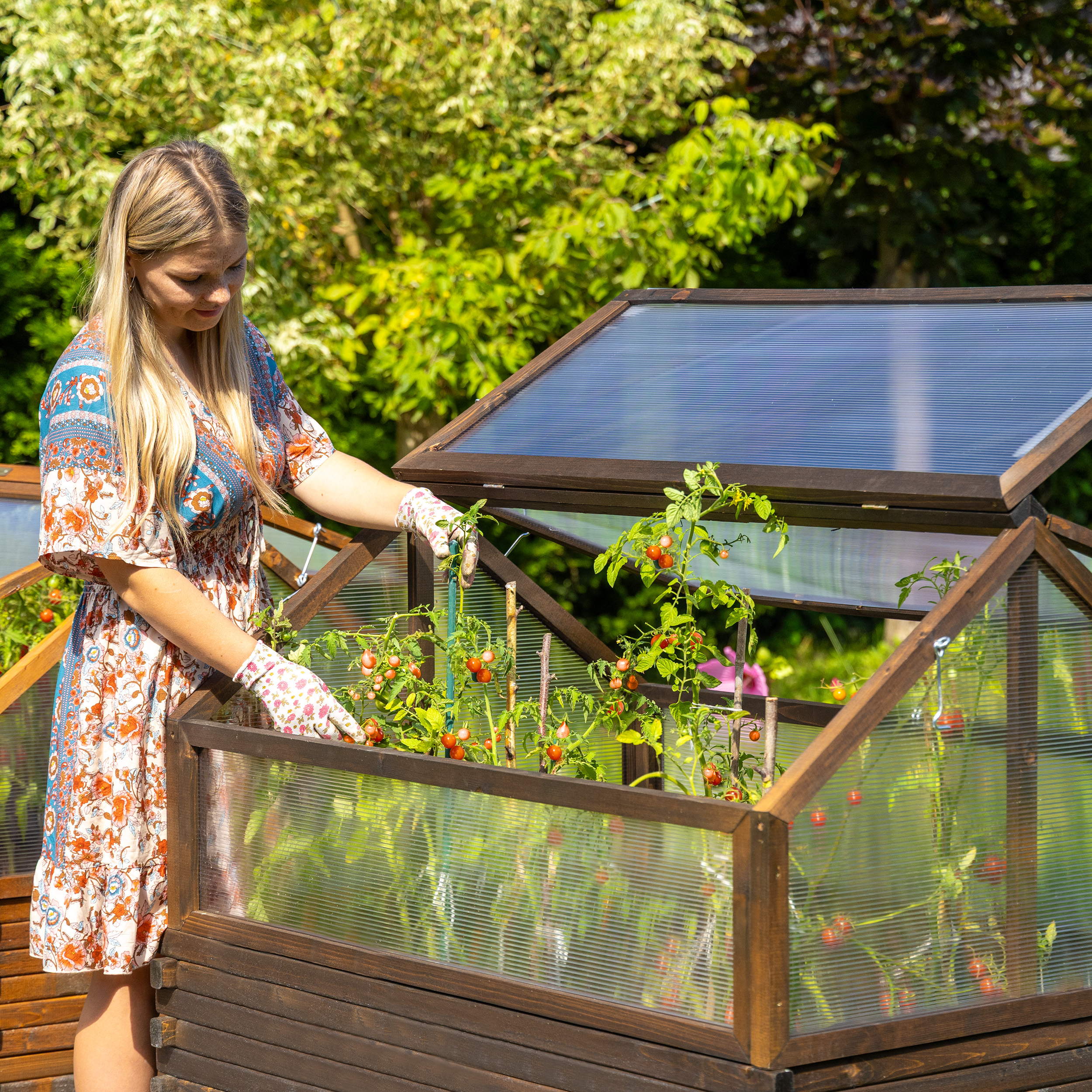
Cherry tomatoes are popular heat-loving vegetables grown on balconies, e.g., in mini greenhouses. Although this group is less demanding than traditional (large-fruited) tomatoes, cultivation under cover positively affects yield. Other popular vegetables used as spices and suitable for mini greenhouses include chili peppers. You can choose different varieties, e.g., varying in spiciness (based on the Scoville Scale), color, and fruit shape. Such an arrangement is not only useful but also visually attractive. A valuable, though less known vegetable is lamb’s lettuce. It can be treated as an alternative to lettuce. It has high soil requirements (fertile substrates) but doesn’t need deep containers. A good yield is also obtained from mizuna, called Japanese cabbage.


Herbs in a mini greenhouse – what to choose?
Growing herbs in a mini greenhouse is easy, and at the same time, it beautifies a given place, e.g., a balcony in an apartment building. Usually, a group of basic, popular herbs is grown in containers. These include: common basil (it’s worth combining varieties with green and purple leaves), summer savory, garden marjoram, sage, and thyme. Various species of mint deserve special attention, used not only for making teas, flavoring drinks, but also as an addition to many dishes. In some cuisines, e.g., French, mint has a much greater importance than in Polish.
- The most popular is peppermint. Original subspecies include chocolate mint and orange mint.
- In addition, there are spearmint, banana field mint, lemon mint, and ginger mint, among others.
- The names well reflect the aroma or flavor of these herbs.
- In a mini greenhouse, there’s enough space for 2-3 species/varieties of mint. It’s important to remember that these are plants that spread vigorously.
Instead of sugar – unusual green proposals for a mini greenhouse
Good proposals for people who limit sugar consumption are plants – “natural sweeteners”. The best known is stevia, which in container cultivation grows to a maximum height of 50cm. It can be successfully planted in a mini greenhouse on the balcony. It has high heat requirements, so cultivation “under glass” is desirable. It is estimated to be 300 times sweeter than sugar. It can be used to sweeten dishes, drinks, and jams. In addition, it’s worth trying to grow Aztec sweet herb. It has a creeping habit. Its use is the same as stevia. It also works well in raised beds.
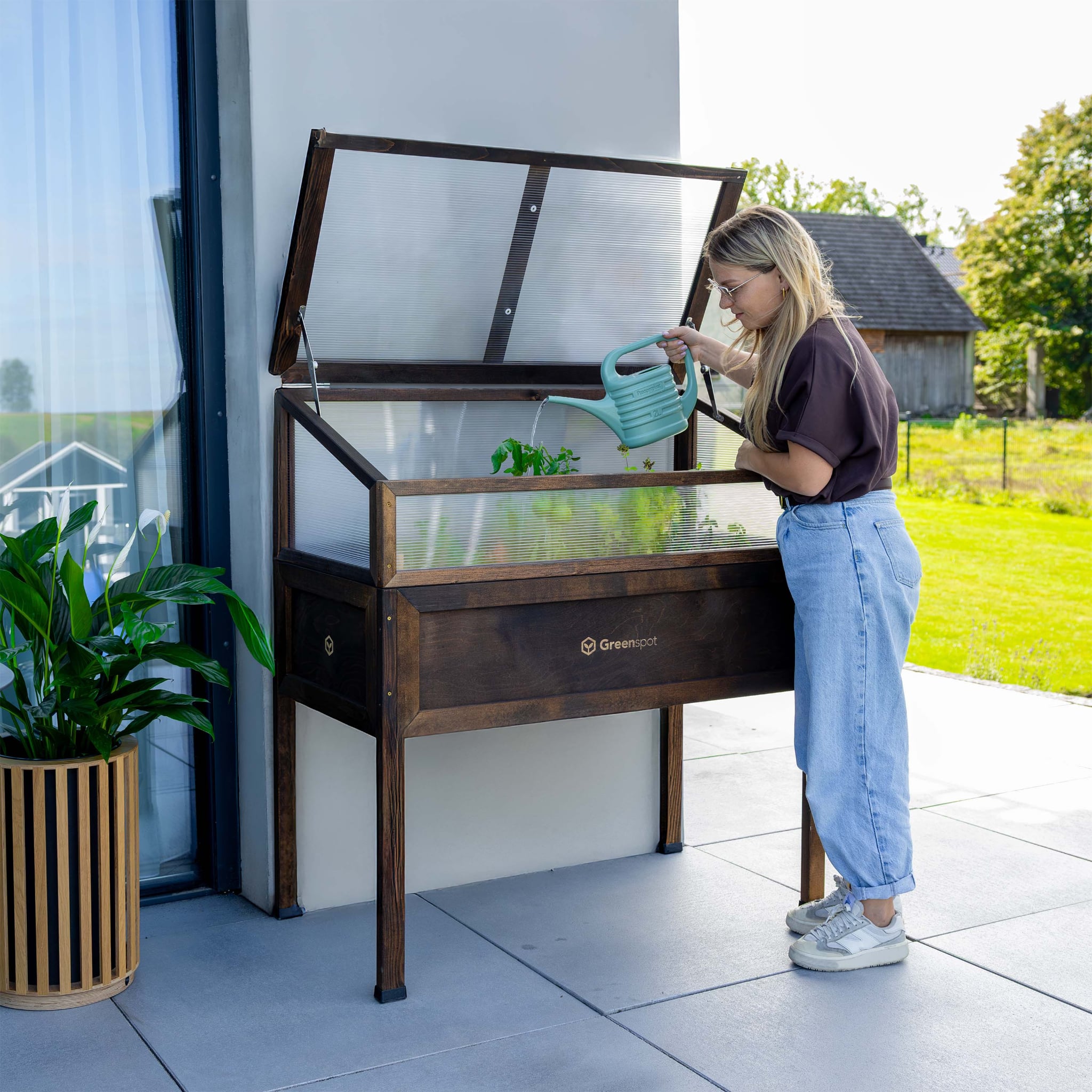
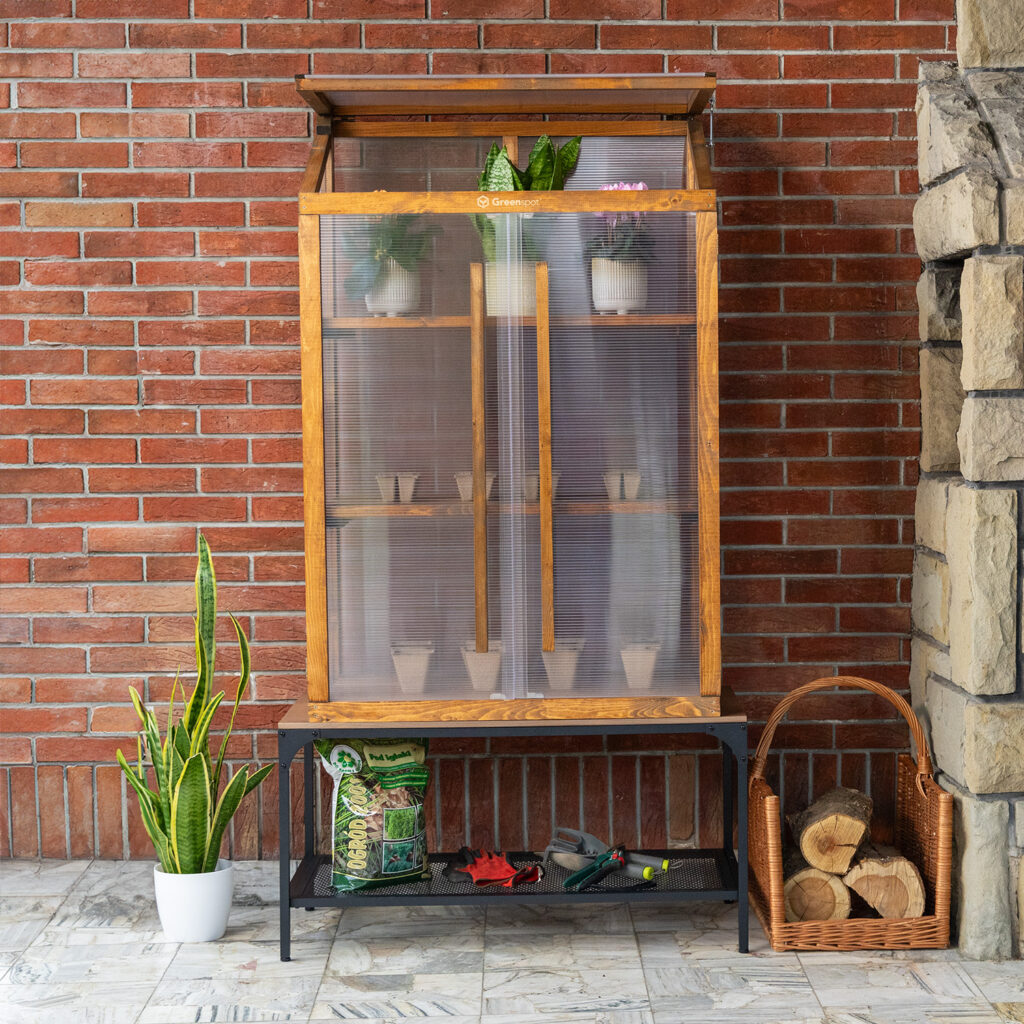
A mini greenhouse at home, on the balcony, or terrace facilitates the cultivation of edible plants (and not only). Thanks to the glass cover, the air and soil temperature is higher (faster development), and additionally, there is a favorable micro-climate for greenery. It’s worth going in this direction, especially since wooden mini greenhouses are also attractive decorative objects.